Why Scammers Love Targeting Believers
Here's an uncomfortable truth: scammers specifically target church communities. Why? Because Christians tend to be trusting, generous, and responsive when someone in their circle vouches for an opportunity.
Con artists exploit that trust. They show up in Facebook prayer groups, Sunday school classes, and Christian investment forums. They use Scripture to make their pitch feel safe. And they count on your goodness to keep you from asking hard questions.
You don't have to stop being trusting. You just need to know what to watch for.
5 Things You Can Do Right Now
These aren't complicated. Each one takes less than an hour, and together they make you dramatically harder to scam.
1. Verify Before You Trust
If someone recommends a crypto opportunity — even your pastor, your best friend, or a respected leader — verify it independently before acting.
What to do:
- Search the project name + "scam" or "review" online
- Check whether the token is listed on a major exchange (Kraken, Coinbase, Binance)
- Look for an active development team with real names, LinkedIn profiles, and a track record
- If the person pressures you to skip this step, that is the red flag
"The simple believe anything, but the prudent give thought to their steps." — Proverbs 14:15
2. Use a Hardware Wallet
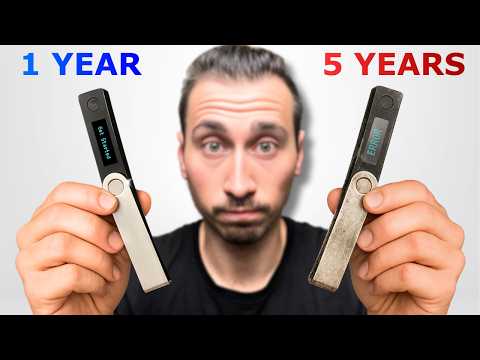
A hardware wallet (like Ledger or Tangem) stores your crypto offline where hackers can't reach it. If your crypto sits on an exchange and that exchange gets hacked, your funds are at risk.
What to do:
- Purchase a hardware wallet directly from the manufacturer's website (never secondhand)
- Set it up and transfer your holdings off the exchange
- Store the device in a secure location
If you need help with setup, that's exactly what Kingdom Builders offers — guided hardware wallet setup at your pace.
3. Set Up 2FA with an Authenticator App
Two-factor authentication (2FA) adds a second lock on your accounts. But not all 2FA is equal — SMS text codes can be intercepted. Use an authenticator app instead.
What to do:
- Set up passkeys where supported, or download an authenticator app such as Google Authenticator or Authy
- Go into the security settings of every crypto-related account
- Enable 2FA using the authenticator app (not SMS)
- Save your backup codes in your password manager
This single step blocks the vast majority of account takeover attacks.
4. Never Share Your Recovery Phrase
Your recovery phrase (also called a seed phrase) is a set of 12 or 24 words that unlocks all your crypto. No legitimate service, support team, exchange, or person will ever ask for it.
What to do:
- Write your recovery phrase on paper only — never type it into a website, email, or message
- Store it in a fireproof safe or safe deposit box
- If anyone asks for it — for any reason — it's a scam. Full stop.
"Above all else, guard your heart, for everything you do flows from it." — Proverbs 4:23. Guard your recovery phrase the same way.
5. Slow Down — If It Feels Urgent, It's a Scam
Scammers manufacture urgency. "This token launches in 48 hours!" "The price is about to explode!" "You need to act NOW or miss out!" Real investment opportunities don't evaporate overnight.
What to do:
- Set a personal rule: you will never make a crypto decision on the same day you learn about it
- Sleep on it. Pray on it. Talk to someone you trust who has no financial stake in the outcome
- Remember: FOMO (fear of missing out) is the scammer's most powerful weapon
"The plans of the diligent lead surely to abundance, but everyone who is hasty comes only to poverty." — Proverbs 21:5
🚩 Red Flag Checklist
Screenshot this and keep it on your phone:
| Red Flag | What It Sounds Like |
|---|---|
| Guaranteed returns | "You'll make 10x, guaranteed" |
| Urgency / pressure | "You have to get in today!" |
| Requests for recovery phrase | "We need your 24 words to verify your wallet" |
| Unsolicited DMs | "Hey, I noticed you're interested in crypto…" |
| Appeals to faith | "God showed me this opportunity" |
| No verifiable team | No real names, no LinkedIn, no history |
| Recruits over product | You earn by signing up others, not by the product working |
| Asks you to send crypto first | "Send 1 ETH and we'll send 2 back" |
If you check even one of these boxes, walk away.
What to Do If You've Already Been Scammed
It happens. Don't be ashamed — these people are professionals at manipulation. Here's what to do:
- Stop sending money immediately — no matter what they tell you
- Document everything — screenshots of messages, wallet addresses, transaction IDs
- Report it to the FTC and IC3
- Tell your community — your honesty may protect someone else
You Don't Have to Figure This Out Alone
Kingdom Builders exists to walk believers through crypto safely — no pressure, no hype, no custody of your funds. Just patient, step-by-step guidance from a fellow Christian.
Ready to get set up the right way? Ask me a question or book a free 15-minute call.