
Crypto Answers for Christians & Seniors
Quick, trustworthy answers for Christians, seniors, and anyone setting up cryptocurrency safely.
Christian Crypto Setup(10)
As a Christian, how do I set up crypto without compromising my faith?
Treat the setup itself as an act of stewardship. Use a reputable exchange like Kraken, a hardware wallet for cold storage, and a password manager for unique credentials. Avoid hype-driven projects, refuse 'guaranteed return' pitches, and only commit funds you can steward soberly. Faith stays intact when wisdom leads the process.
Read more →What's the first step a Christian should take before buying any crypto?
Before a single dollar moves, secure your foundation: a dedicated email, a strong password manager like Bitwarden, and an authenticator app for 2FA. Then talk it over with your spouse or a trusted believer. The first 'investment' is preparation — Proverbs 21:5 says diligent planning, not haste, leads to abundance.
Read more →How do I tithe or give offerings from cryptocurrency?
Many churches and Christian nonprofits now accept crypto directly through services like The Giving Block. Donating appreciated crypto can avoid capital gains tax while honoring Proverbs 3:9 — giving the firstfruits of your increase. If your church can't receive crypto yet, sell to fiat first and tithe normally.
Read more →Should my spouse be involved in setting up our crypto together?
Yes — strongly recommended. A spouse who knows the exchange, the hardware wallet, the recovery phrase location, and the password manager master key can act if something happens to you. Crypto held in secret becomes crypto that's lost. Unity in finances reflects unity in marriage and protects the household.
Read more →How do I keep my crypto setup honest and transparent before God?
Report all gains on your taxes, refuse to chase 'insider' tips, document holdings clearly so your family isn't deceived later, and avoid platforms that exist to evade lawful obligations. Luke 16:10 says faithfulness in small things invites trust with greater things. Transparent stewardship guards both your conscience and your witness.
Read more →Is it wrong for a Christian to use a hardware wallet and keep things private?
No. Financial privacy isn't secrecy — Matthew 6:3 actually commends quiet generosity. A hardware wallet protects your household from theft and fraud, which is good stewardship, not greed. The line is crossed when privacy is used to deceive a spouse, evade taxes, or hide from accountability — not when it's used to protect what God entrusted.
Read more →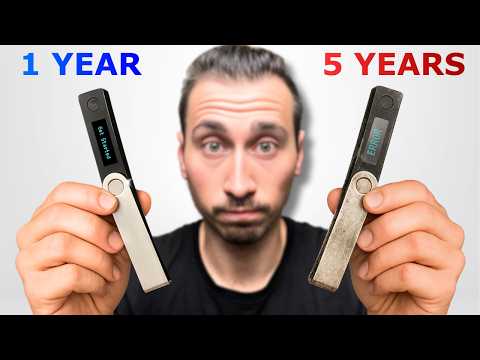
How do I pray through a crypto decision without being superstitious about it?
Pray for wisdom (James 1:5), not for a specific coin to moon. Ask God for clarity, sober judgment, and contentment with whatever outcome follows. Then do the work — research, counsel, diversification. Faith partners with diligence; it doesn't replace it. Decisions made in peace and prayer rarely become regrets.
Read more →What does "stewardship" actually look like in a real crypto setup?
It looks ordinary: a written budget for what you'll invest, a hardware wallet for long-term holdings, a password manager, two-factor authentication, a documented recovery plan for your spouse, regular giving from gains, and honest tax reporting. Stewardship is boring on purpose — it's the opposite of speculation, and it lasts.
Read more →How do I teach my adult children to handle our crypto if I pass away?
Build a Digital Asset Inventory: list each exchange, wallet, recovery phrase location, and trusted contact. Walk one adult child through the hardware wallet at least once so it isn't a mystery later. Pair the inventory with your will or trust. A clear handoff is one of the kindest things you can leave behind.
Read more →Can I be coached one-on-one by another believer instead of using YouTube?
Yes — that's exactly what Kingdom Builders exists for. I coach you verbally, screen-share at your pace, and you perform every action on your own devices and accounts. No custody, no shortcuts, no pressure. It's plain-language education from a fellow Christian who's walked dozens of believers through this safely.
Read more →Christian Seniors & Crypto Setup(12)
I'm 70+ and not very technical — can I really set up crypto myself?
Yes, with patient guidance. Most seniors I've coached had never used a password manager and still finished setup in two or three calm sessions. We go one screen at a time, in plain English, no jargon. You're not too old; the tools are just unfamiliar. Familiarity comes faster than you'd expect.
Read more →Is crypto safe for retirees on a fixed income?
Crypto can fit a retiree's plan when sized correctly — usually a small percentage of overall assets, never funds you'd need within a few years. The danger isn't the asset; it's overcommitting or chasing scams that target seniors. With a hardware wallet and a small allocation, exposure stays manageable.
Read more →What's the simplest hardware wallet for a senior to use?
Tangem is the easiest I've seen for seniors. It's a card you tap against your phone — no cables, no tiny buttons, no 24-word phrase to copy by hand. Backup is handled by additional cards instead of a paper seed. Most seniors finish setup in under 20 minutes with coaching.
Read more →How long does setup take for someone who's never used a password manager?
Plan on three to four hours total, broken into shorter sessions. The first hour covers email security and Bitwarden, the second covers the Kraken account and 2FA, the third covers the hardware wallet, and a final short call confirms a small first purchase. Slow and steady prevents costly mistakes.
Read more →What if I forget my password or recovery phrase later?
Your Bitwarden master password and your hardware wallet recovery phrase are the two things that cannot be reset by anyone. We write them down on paper, store them in a safe place at home, and tell one trusted person where they are. Lose those, and the crypto is gone — so we protect them carefully.
Read more →Can my adult child help me set up crypto without taking control of it?
Absolutely. Your child can sit beside you, but the accounts, passwords, and hardware wallet stay in your name and under your control. I encourage having one trusted adult child present — they learn the system for the future, while you remain the owner today. Independence and family support can coexist.
Read more →Do I need a smartphone, or can I do this on a computer?
A computer works for most steps — Kraken, Bitwarden, and email all run in a browser. A smartphone is only needed for the authenticator app and, if you choose Tangem, the wallet itself. If you only have a computer, we use Ledger instead, which plugs in by USB. Either path works.
Read more →How do I make sure my crypto goes to my family if something happens to me?
Build a simple Digital Asset Inventory listing each account, the hardware wallet, the recovery phrase location, and one trusted contact. Pair it with your will or trust so the legal authority and the access information line up. Without this, family members often cannot recover the assets, even when they legally inherit them.
Read more →What's the safest way for a senior to make their first $100 crypto purchase?
Use Kraken, link your bank, and buy $100 of Bitcoin or XRP after 2FA is active. Leave it on the exchange for one day to confirm everything works, then send a small test amount to your hardware wallet before moving the rest. Small, deliberate steps build confidence and catch mistakes early.
Read more →How do I avoid the scams that specifically target older Christians?
Three rules stop most of them: never act on urgent phone calls, texts, or emails about crypto; never share your recovery phrase with anyone — ever; and never let a stranger 'help' you over remote screen-share. Real coaches teach you; scammers rush you. If it feels pressured, hang up and call me.
Read more →Should I tell my bank I'm buying crypto?
Yes — a quick heads-up call prevents your first transfer to Kraken from being flagged or reversed. Tell them the amount, that it's going to a U.S.-regulated exchange, and that you initiated it. Banks often block crypto transfers to protect seniors from scams; a brief call clears the path.
Read more →Can I get patient, verbal coaching instead of watching tutorial videos?
Yes. Kingdom Builders is built for this. We meet on a video call, I share my screen and explain each step in plain English, and you perform the action on your own device. You can pause, ask anything, and revisit later. No video tutorials required — just calm, one-on-one guidance.
Read more →General Crypto Questions(53)
Is cryptocurrency safe for Christians?
Yes. Cryptocurrency is a neutral financial tool — like money itself. The Bible calls believers to be wise stewards of all resources (Luke 16:10). The real risks come from lack of education, not the asset class. With proper security setup and a stewardship mindset, Christians can participate in crypto responsibly.
Read more →What does the Bible say about investing in crypto?
The Bible doesn't mention cryptocurrency, but it provides clear principles: diligent planning leads to abundance (Proverbs 21:5), diversify your holdings (Ecclesiastes 11:2), avoid debt-fueled investing (Proverbs 22:7), seek counsel (Proverbs 15:22), and give generously from your increase (Proverbs 3:9-10).
Read more →
How do I buy cryptocurrency for the first time?
Start by securing your digital foundation: create a dedicated email, set up a password manager, and enable two-factor authentication. Then open an account on a reputable exchange like Kraken, complete identity verification, link your bank, and make a small first purchase. The whole process takes 2-3 hours.
Read more →What is the safest way to store crypto?
A hardware wallet — a small physical device that stores your private keys offline. Popular options include Ledger and Tangem. Unlike keeping funds on an exchange, a hardware wallet puts you in full control and is essentially untouchable by hackers.
Read more →What is a hardware wallet and do I need one?
A hardware wallet is a physical device (about the size of a USB stick or credit card) that stores your cryptocurrency keys offline. If you hold any significant amount of crypto, yes — you need one. Every major crypto theft in history happened because funds were stored online.
Read more →What are the most common crypto scams?
The five most common scams are: 'blessed investment' schemes promising guaranteed returns, fake exchange or wallet apps, fraudulent 'crypto coach' services, phishing emails and letters impersonating wallet manufacturers, and social media giveaway scams ('send 1 BTC, get 2 back'). All rely on urgency and trust exploitation.
Read more →How do Christians avoid crypto scams?
Follow five practical steps: verify any opportunity independently before acting, use a hardware wallet for offline storage, enable 2FA with an authenticator app (not SMS), never share your recovery phrase with anyone, and refuse to make rushed decisions. If it feels urgent, it's almost certainly a scam.
Read more →What is a recovery phrase and why is it important?
A recovery phrase (or seed phrase) is a set of 12 or 24 words generated when you set up a hardware wallet. It's the master key to all your crypto. If your device breaks or is lost, this phrase recovers everything on a new device. Never share it with anyone — no legitimate service will ever ask for it.
Read more →What is ISO 20022 and why does it matter for crypto?
ISO 20022 is the international standard for financial messaging — the structured, data-rich format banks and payment systems use to describe a payment. SWIFT cross-border traffic fully migrated to it in November 2025. Several cryptocurrencies, including XRP, XLM, ALGO, HBAR and IOTA, are built to be compatible, meaning they can format messages that conform to the standard.
Read more →Which cryptocurrencies are ISO 20022 compliant?
The coins most frequently listed as ISO 20022 compatible are XRP, XLM, ALGO, HBAR, IOTA, QNT, XDC and ADA. 'Compliant' usually means the chain can format messages that conform to the standard — not that any bank is actively using it in production. Compatibility doesn't guarantee adoption or price appreciation.
Read more →When does ISO 20022 go live? What is the deadline?
It already has, in stages. SWIFT cross-border payments finished their coexistence window in November 2025 — ISO 20022 is now the only language SWIFT speaks for those messages. Major domestic rails are live or finishing cutovers in 2025–2026: Fedwire migrated in March 2025, the eurozone's T2/T2S is live, and the UK's CHAPS has completed its transition.
Read more →Is XRP ISO 20022 compliant?
Yes. Ripple is a member of the ISO 20022 standards body, its messaging layer can carry ISO 20022 fields, and RippleNet is used in production by a number of banks for cross-border settlement. Of the commonly listed ISO 20022 coins, XRP has the strongest real-world bank-usage case — though that still doesn't guarantee price appreciation.
Read more →What is the best crypto exchange for beginners?
Kraken is recommended for beginners due to its strong security track record, reasonable fees, good customer support, and user-friendly interface. Always choose an exchange that requires identity verification (KYC) — legitimate exchanges follow regulatory requirements.
Read more →Should I use SMS or an authenticator app for 2FA?
Prefer phishing-resistant passkeys where your exchange supports them (Kraken does), and keep a secure backup method. If passkeys aren't available, use an authenticator app like Google Authenticator or Authy. Avoid SMS when a stronger option exists, because SMS codes can be intercepted through SIM-swapping attacks.
Read more →How much money do I need to start with crypto?
You can start with as little as $10-$50. The key principle is to only invest what you can comfortably live without. Never borrow money, use credit cards, or tap emergency funds for crypto purchases. Start small, learn the mechanics, and scale gradually as your knowledge grows.
Read more →Is it a sin to invest in cryptocurrency?
No. Cryptocurrency is a tool, and the Bible focuses on the heart posture behind financial decisions, not specific investment vehicles. Investing with diligence, wisdom, and stewardship aligns with biblical principles. What the Bible warns against is greed, hasty speculation, and the love of money (1 Timothy 6:10).
Read more →What should I do if I've been scammed in crypto?
Stop sending money immediately. Document everything with screenshots of messages, wallet addresses, and transaction IDs. Report the fraud to the FTC (reportfraud.ftc.gov) and IC3 (ic3.gov). Then tell your community — your honesty may protect someone else from the same scam.
Read more →What is Kingdom Builders?
Kingdom Builders is a crypto onboarding service for Christians, run by Michael Cameron — a technology educator who previously held CompTIA A+, Network+, and Security+ certifications (2013–2017). The service provides guided setup for exchanges, hardware wallets, password managers, and 2FA — walking believers through every step so they can participate in crypto safely and confidently.
Read more →Can I donate cryptocurrency to my church or charity?
Yes. Many nonprofits now accept cryptocurrency donations, and donating appreciated crypto directly can provide tax benefits since you may avoid capital gains tax on the appreciation. This is one way to honor Proverbs 3:9-10 — giving the firstfruits of your increase to the Lord.
Read more →What is the difference between Ledger and Tangem wallets?
Ledger is a USB-style device with a screen, mobile app support, and wide coin compatibility. Tangem is a card-shaped wallet that works by tapping your phone — no cables or software needed, making it incredibly beginner-friendly. Both are excellent; the best choice depends on your comfort level with technology.
Read more →How do I set up a Ledger Nano?
Unbox the device, connect it to your computer via USB, and download Ledger Live from ledger.com. The app walks you through creating a PIN, generating your 24-word recovery phrase, and verifying it. Write the phrase on the provided card and store it somewhere safe offline — never digitally. The entire setup takes about 30 minutes.
Read more →How do I set up a Tangem wallet?
Download the Tangem app on your phone, tap your Tangem card to the back of your device, and follow the on-screen prompts to create an access code and backup. Tangem uses multiple cards as backups instead of a traditional recovery phrase, making it one of the simplest hardware wallets to set up — most people finish in under 15 minutes.
Read more →Is XRP a good investment for Christians?
XRP (Ripple) is designed for fast, low-cost cross-border payments and is ISO 20022 compliant, meaning it could integrate with global banking infrastructure. Whether it's a good investment depends on your financial goals, risk tolerance, and portfolio diversification — not on the token itself. Apply biblical principles: research diligently, never invest more than you can afford to lose, and avoid hype-driven decisions.
Read more →How do I report cryptocurrency on my taxes?
In the U.S., the IRS treats cryptocurrency as property. You must report gains or losses when you sell, trade, or spend crypto. Most exchanges like Kraken provide tax reports or downloadable transaction histories. Consider using crypto tax software like Koinly or CoinTracker to calculate your obligations, and consult a tax professional for your specific situation.
Read more →Where should I store my recovery phrase?
Write it on paper and store it in a secure, fireproof location like a safe. For additional protection, consider a metal backup device like Cryptosteel or Billfodl that can survive fire and water damage. You can also store an encrypted copy in a password manager like Bitwarden. Never store it as a plain photo, screenshot, or unencrypted digital file.
Read more →What is a password manager and do I need one for crypto?
A password manager like Bitwarden securely stores all your login credentials behind one master password. For crypto, it's essential — you'll have accounts on exchanges, wallet apps, and email services that all need strong, unique passwords. A password manager generates and remembers them so you don't reuse passwords or write them on sticky notes.
Read more →Can I buy crypto with a credit card?
Technically yes, but you shouldn't. Most exchanges charge higher fees for credit card purchases, and you'll pay interest on the balance. More importantly, borrowing money to invest violates the biblical principle in Proverbs 22:7 — 'the borrower is slave to the lender.' Use a linked bank account or debit card instead.
Read more →What is the difference between a coin and a token?
A coin (like Bitcoin or XRP) operates on its own blockchain and typically functions as digital money. A token (like USDC or LINK) is built on top of another blockchain, usually Ethereum, and can represent anything from assets to access rights. Both can be stored on hardware wallets, but understanding the distinction helps you evaluate what you're buying.
Read more →Is it too late to buy Bitcoin?
Many believers and financial analysts argue that Bitcoin is still in early adoption — comparable to the internet in the early 2000s. You don't need to buy a whole Bitcoin; you can purchase fractions called 'satoshis.' The biblical principle applies: don't let fear of missing out drive your decision, and don't let fear of loss paralyze you either. Research, pray, and invest what you can steward responsibly.
Read more →
What is a phishing scam in crypto?
A phishing scam tricks you into revealing sensitive information — like your recovery phrase, exchange password, or 2FA code — by impersonating a legitimate company. In crypto, these come as fake emails from exchanges, fraudulent wallet apps, and even physical letters claiming to be from hardware wallet manufacturers like Ledger. Never click links in unsolicited messages, and always navigate directly to official websites.
Read more →Should I buy only one cryptocurrency or diversify?
Ecclesiastes 11:2 says 'divide your investments among many places, for you do not know what risks might lie ahead.' Diversification reduces your exposure to any single asset failing. A balanced approach might include Bitcoin (store of value), a few ISO 20022 tokens (utility), and a stablecoin (stability) — but only after you understand what each one does.
Read more →What happens if my hardware wallet breaks or is lost?
Your crypto is not actually stored on the device — it's on the blockchain. The hardware wallet simply holds the keys to access it. If your device breaks, is lost, or stolen, you can recover everything on a new hardware wallet using your recovery phrase. This is why protecting that phrase is the single most important thing in crypto security.
Read more →How do I transfer crypto from an exchange to my hardware wallet?
In your hardware wallet app (like Ledger Live), find the 'Receive' option and copy your wallet address. Then go to your exchange account, select 'Withdraw,' paste the wallet address, and confirm the transaction. Always send a small test amount first to verify the address is correct before transferring larger sums.
Read more →What is the Great Wealth Transfer and how does it relate to crypto?
The Great Wealth Transfer refers to the prophetic belief — supported by passages like Proverbs 13:22 and Isaiah 60:5 — that God is shifting financial resources into the hands of His people for Kingdom purposes. Many believers see the rise of decentralized finance and cryptocurrency as part of this transfer, providing an opportunity for prepared stewards to receive and redistribute wealth for God's glory.
Read more →
What is a stablecoin and should I own one?
A stablecoin is a cryptocurrency pegged to a stable asset like the U.S. dollar. Popular examples include USDC and USDT. They don't fluctuate wildly like Bitcoin or XRP, making them useful for parking funds between trades, earning yield, or simply holding digital dollars. Having some stablecoins in your portfolio provides stability and liquidity without cashing out to your bank.
Read more →What is DeFi and is it safe for beginners?
DeFi (Decentralized Finance) refers to financial services — lending, borrowing, trading — built on blockchain without traditional banks. While the technology is legitimate and growing, DeFi carries higher risk due to smart contract vulnerabilities, scams, and complexity. Beginners should master the basics (exchange accounts, hardware wallets) before exploring DeFi, and never invest more than they can afford to lose.
Read more →What is staking in crypto and can Christians participate?
Staking means locking up your cryptocurrency to help validate transactions on a blockchain, earning rewards in return — similar to earning interest. There's nothing unbiblical about it. Just be aware of lock-up periods (you can't access your funds), and understand that staked tokens can lose value. Research each protocol carefully and never stake more than you're willing to have locked up.
Read more →What is a VPN and do I need one for crypto?
A VPN (Virtual Private Network) encrypts your internet traffic and hides your IP address. While not strictly required, using a VPN adds a meaningful layer of privacy when accessing crypto exchanges, especially on public Wi-Fi. Reputable options include ProtonVPN (free) and Mullvad. Think of it as locking the door before you count your money.
Read more →Should Christians invest in privacy coins like Monero?
Privacy coins like Monero (XMR) make transactions untraceable, which serves a legitimate purpose — financial privacy is biblical (Matthew 6:3-4). However, some exchanges restrict or delist privacy coins due to regulatory pressure. Christians should weigh their need for financial privacy against liquidity concerns and ensure they're complying with tax reporting requirements.
Read more →How do I protect my crypto as part of my estate plan?
Crypto doesn't automatically transfer to heirs like a bank account. You need a plan: document your wallet types and access instructions in a secure location, name a trusted person who can access your recovery phrases, and consider using a trust to hold your digital assets. Without an estate plan, your crypto could be permanently lost when you pass away.
Read more →What is a trust and can it hold cryptocurrency?
A trust is a legal arrangement where assets are held by a trustee for the benefit of named beneficiaries. Yes, trusts can hold crypto — by titling exchange accounts in the trust's name and including digital asset provisions in the trust document. A revocable living trust is the most common starting point. For full details on all trust types, LLC strategies, and crypto custody planning, see our in-depth guide.
Read more →What is the Iraqi Dinar and why do people invest in it?
The Iraqi Dinar (IQD) is the national currency of Iraq. Some investors believe a future revaluation (RV) will dramatically increase its value as Iraq rebuilds its economy and oil infrastructure. While the possibility exists, there are also significant risks, including scams targeting Dinar investors. Research thoroughly, purchase only from reputable dealers, and never invest more than you can afford to lose.
Read more →
What is the difference between hot storage and cold storage?
Hot storage means your crypto keys are on a device connected to the internet — like an exchange account or mobile wallet app. Cold storage means your keys are offline — on a hardware wallet or paper wallet. Cold storage is far more secure for long-term holdings, while hot storage is convenient for active trading. Most experts recommend keeping the majority of your crypto in cold storage.
Read more →Is physical gold or silver a good complement to crypto?
Many financial stewards hold both precious metals and cryptocurrency as part of a diversified portfolio. Gold and silver have been stores of value for thousands of years (Genesis 13:2), while crypto represents emerging digital value. Physical silver in particular is often mentioned as undervalued. The key is balance — don't put all your resources in one asset class.
Read more →What is an LLC and should I use one to hold crypto?
An LLC (Limited Liability Company) separates your personal assets from your business or investment assets. Holding crypto in an LLC provides liability protection, tax flexibility, and privacy — especially for larger portfolios. The most effective strategy pairs an LLC with a trust: the trust owns the LLC, the LLC holds the assets, and you manage the LLC. Best states for formation include Wyoming, Nevada, and New Mexico.
Read more →What type of trust is best for protecting my assets?
It depends on your goals. A Revocable Living Trust avoids probate and maintains privacy but doesn't protect against lawsuits. For lawsuit and creditor protection, an Irrevocable Trust or Domestic Asset Protection Trust (DAPT) — available in Nevada, South Dakota, Delaware, Wyoming, and Alaska — is more powerful. Our full guide breaks down 8 trust types with pros, cons, and cost ranges.
Read more →Do I need an LLC or a trust to protect my investments?
Ideally, both. A trust handles estate planning — avoiding probate, maintaining privacy, and ensuring smooth wealth transfer. An LLC provides a liability shield, separating personal assets from investment assets. Combined, they offer comprehensive protection. The full Kingdom Builders guide includes comparison charts and a step-by-step preparation checklist.
Read more →Can a trust hold foreign currency like Iraqi Dinar?
Yes. Physical foreign currency notes — including Iraqi Dinar (IQD) and Vietnamese Dong (VND) — can be listed in your trust's asset schedule with serial numbers, denominations, and quantities. Your trust document should include storage instructions and exchange/redemption authority so your trustee can act if needed. Keep dealer receipts and provenance records with your trust documents.
Read more →How do I protect physical silver or gold in a trust?
Title your safe deposit box in the name of your trust, maintain a detailed inventory with photographs and dealer receipts stored separately, and ensure any vault storage is allocated (specific bars/coins assigned to you). An LLC can add an additional liability layer. Document everything so your trustee knows exactly what you own and where it's stored.
Read more →How do I know if a crypto project is legitimate?
Evaluate these factors: Does the project have a clear use case and working product? Is the team publicly identifiable with verifiable credentials? Is the code open-source and audited? Are there real partnerships and adoption, not just marketing hype? Does the tokenomics make sense? If a project promises guaranteed returns or uses urgency tactics, it's almost certainly a scam.
Read more →Should I buy Bitcoin at today's price or wait for the crash?
In our community we believe Bitcoin is prophesied to crash to near zero before the great wealth transfer completes. Buying at today's prices means riding that drop down. The wiser move is to pre-position laddered limit buy orders ("fishing orders") on Kraken at crash-level prices and let the dip fill your bag automatically. Patience is a position.
Read more →What is a 'fishing order' on Kraken and how does it work?
A fishing order is a Good-'Til-Canceled limit buy order placed well below the current market price. You fund your Kraken account in USD or USDC in advance, set the order, and it sits open at zero cost until price reaches your level. If the crash never comes, nothing fills and nothing is lost. If it does, you buy automatically at the price you chose, not the price the market panic chose for you.
Read more →What happens to my fishing orders if Bitcoin crashes past all of them?
It can happen. No one catches the exact bottom. That's why the strategy includes reserve capital held back from the initial ladder. If price blows through every rung, you can add lower rungs after the first ladder fills. Accept partial fills, missed bottoms, and imperfect timing up front. The goal isn't perfection; it's being positioned at prices most of the world never thought possible.
Read more →Programmable Money & CBDCs(5)
What is programmable money?
Programmable money is digital currency with rules coded into the token itself. Issuers or governments can set expiration dates, restrict what it can be spent on, freeze it, or burn it remotely. Unlike cash, every unit can be tracked, conditioned, or revoked on demand.
Read more →Does the GENIUS Act apply to stablecoins I already own?
Yes. The 2025 GENIUS Act requires every U.S. stablecoin issuer (including USDC and USDT) to be able to seize, freeze, or burn tokens on lawful order, regardless of which wallet they sit in. Self-custody does not bypass the issuer's controls at the smart-contract level.
Read more →Is Bitcoin programmable money?
No. Bitcoin's base layer has no built-in freeze, expire, or seize functions, and no central issuer who could add them. That is one reason it is treated differently from stablecoins and CBDCs, though exchange-held Bitcoin can still be frozen at the custodian level.
Read more →How does tokenization of stocks and real estate affect me?
When traditional assets are tokenized, ownership records move from paper deeds and brokerage ledgers onto programmable rails controlled by a handful of issuers. That can streamline settlement, but it also concentrates the ability to freeze, restrict, or reassign assets in ways the legacy system cannot.
Read more →What should a Christian steward do about programmable money?
Stay informed, avoid panic, and act with wisdom. Understand what you actually hold, diversify into hard assets and properly self-custodied crypto where prudent, keep some margin outside the fully digital system, and anchor your security in God rather than any government or corporation.
Read more →Don't See Your Question?
I'm here to help believers navigate crypto safely. Let's talk about your specific situation.
Book a Free 15-min Call