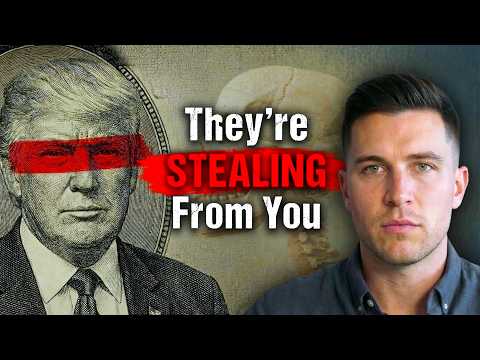
A Conversation Every Kingdom Builder Should Hear
In a recent interview on The Anchormen Show, Peymon Mottahedeh — founder of Freedom Law School — made a claim that stops most people in their tracks:
"99% of Americans are not legally required to file or pay federal income taxes."
Before you dismiss it, consider this: Peymon has not filed a federal income tax return since 1993. He has not paid federal income taxes in over 30 years. And he has never been criminally charged for it.
He founded Freedom Law School in 1996, and according to Peymon, not a single one of his students has ever gone to prison for following his teachings on federal income tax.
That's a track record worth examining.
The Core Argument: What the Law Actually Says
Peymon's position is rooted in a straightforward reading of the tax code and Supreme Court case law. Here's the summary:
The 16th Amendment Didn't Create a New Tax
The 16th Amendment, ratified in 1913, states:
"The Congress shall have power to lay and collect taxes on incomes, from whatever source derived, without apportionment among the several States."
Most Americans assume this gave the government the power to tax their wages. But according to multiple Supreme Court rulings, the 16th Amendment did not create a new tax or expand the federal government's taxing power. It simply clarified how existing taxes could be collected.
As the Supreme Court stated in Stanton v. Baltic Mining Co. (1916):
"The 16th Amendment conferred no new power of taxation."
"Income" Has a Specific Legal Definition
Peymon argues that the legal definition of "income" under the tax code does not include the wages of most working Americans. According to this view, taxable income applies to:
- Federal employees earning money from the federal government
- Individuals exercising a federal privilege (such as operating in federal territories or dealing in regulated industries)
- Corporate profit — gains and profits derived from corporate activity
The everyday wages of a private-sector worker exchanging labor for compensation, Peymon contends, do not fall under the statutory definition of taxable income.
Case Study: Former IRS Agent Joseph Banister
One of the most compelling pieces of evidence Peymon presents is the story of Joseph Banister — a former gun-carrying IRS Criminal Investigation Division special agent. After learning about these constitutional arguments, Banister investigated them internally at the IRS. When the IRS could not answer his questions, he went public with his findings. He was fired and later indicted in 2004 for tax-related charges.
In 2005, a jury acquitted Banister on all counts. He has not filed a federal income tax return since — and remains free. When a former IRS enforcement agent investigates the system, concludes it's unconstitutional, gets put on trial, and is found not guilty by a jury of his peers, that's a data point worth considering.
Peymon's Personal Tax Court Victory
The IRS assessed over $660,000 in taxes against Peymon covering 13 years of non-filing. He fought through IRS appeals and into tax court. The government lawyer remanded the case back to IRS appeals for a new hearing — and the IRS appeals officer zeroed out all tax liens and assessments. The final order is published on his website for anyone to verify.
The Numbers Behind the Claim
80 Million Non-Filers
According to IRS statistics that Peymon cites in the interview, approximately 80 million Americans who are supposedly "required" to file federal income tax returns simply don't file. They're not all in prison. They're not all having their wages garnished. The IRS lacks the resources and, Peymon argues, the legal standing to pursue them all — because the legal obligation may not exist for most of them.
The $50,000 Challenge
Peymon is so confident in his legal position that he offers a $50,000 reward to anyone who can prove his claims wrong using the actual law and Supreme Court rulings. A George Washington University law professor attempted to collect on a previous $300,000 version of this challenge — and failed. The challenge remains uncollected.
The 1040 Is Voluntary — By Design
One of the most striking points Peymon raises is about the IRS Form 1040 itself. When you sign a 1040, you sign it under penalty of perjury. This means:
- You are voluntarily swearing that the information is true and correct
- A document signed under penalty of perjury cannot be compelled — it must be voluntary
- If filing were truly mandatory, the government would not need your sworn, voluntary testimony to enforce it
This is a subtle but legally significant distinction: compelled speech under penalty of perjury would violate the Fifth Amendment protection against self-incrimination.
The Matt Gaetz Question: "But What About Consequences?"
During the interview, the hosts acknowledged what every listener is thinking: If I stop filing, won't the IRS come after me?
Peymon doesn't sugarcoat it. He acknowledges that:
- The IRS does pursue people who stop filing
- There are consequences if you don't understand the law and handle things correctly
- This is not a path you walk without education and preparation
His answer? That's exactly why Freedom Law School exists — to educate Americans on the law so they can make informed decisions and stand on solid legal ground if challenged.
As Peymon put it in the interview: this requires knowledge and courage. He's not telling anyone to simply stop filing. He's saying: learn the law first, then decide for yourself.
How Peymon Has Handled IRS Confrontation
Peymon shared a revealing story from the interview: the IRS Criminal Investigation Division once served a summons on a hotel to obtain records of Freedom Law School event attendees — essentially trying to identify people who attended his seminars. Peymon responded by suing the IRS agent personally for violating the First Amendment rights of his attendees. The IRS's own lawyer subsequently forced the agent to retract the summons. The case demonstrates that understanding the law and being willing to assert your rights can produce results even against the most powerful enforcement agency in the country.
Freedom Law School: Education and Support
Freedom Law School offers courses, seminars, and legal support for Americans who want to understand their rights under the tax code. Peymon has been teaching this material for nearly three decades. You can verify his claims and access his seven-step process for free at stopthefed.com.
His organization provides:
- Educational courses on the Internal Revenue Code and constitutional tax law
- Legal research support for those who choose to exercise their rights
- Community and mentorship from others who have walked this path
Peymon's Practical Advice: File an Extension First
For anyone currently in the system, Peymon offers a practical first step: file for a tax extension before April 15. This buys you time — typically six months — to investigate and verify his claims before making any decisions. He emphasizes that once you sign a 1040, you've made a voluntary sworn statement under penalty of perjury, and that's very difficult to undo. An extension gives you breathing room to educate yourself without any immediate consequences.
A Special Offer for Kingdom Builders
If you're interested in exploring Freedom Law School's resources, mention the name Michael Cameron when you reach out to Peymon's team to receive a discount on their services.
Why This Matters for Kingdom Builders
At Kingdom Builders, we believe in stewardship with understanding. We don't follow blindly — whether it's the financial system, the tax system, or any other institution. We study, we pray, and we act with wisdom.
Peymon's message aligns with a principle we hold dear:
"My people are destroyed for lack of knowledge." — Hosea 4:6
Whether you agree with Peymon's conclusions or not, understanding the law that governs your finances is an act of stewardship. Knowledge is not rebellion — it's responsibility.
We encourage you to:
- Watch the full interview — it's available in our Video Library
- Do your own research — read the Supreme Court cases Peymon references
- Pray about it — ask God for wisdom and discernment
- Talk to a trusted advisor — discuss what you learn with people you trust
The Bottom Line
Peymon Mottahedeh has been making this argument for over 30 years. He hasn't filed. He hasn't paid. He hasn't gone to prison. And neither have his students.
That doesn't automatically make him right about everything — but it means his perspective deserves serious consideration rather than reflexive dismissal.
The question isn't whether you should stop paying taxes tomorrow. The question is: do you actually understand the law you're complying with?
This article is for educational and informational purposes only. It does not constitute legal advice, tax advice, or financial advice. Kingdom Builders is not a law firm, tax consultancy, or licensed financial advisor. Always do your own research and consult qualified professionals before making decisions about your tax obligations.
#NotLegalAdvice #NotTaxAdvice #NotFinancialAdvice