📑 Table of Contents
- Direct Taxes vs. Indirect Taxes — The Simple Difference
- So What Is the "Privilege" Being Taxed?
- Bottom Lines — What This Means in Simple Terms
- How Does This Affect the Average American?
- How Does This Affect Poor Americans Living Under the Poverty Line?
- Final Thoughts
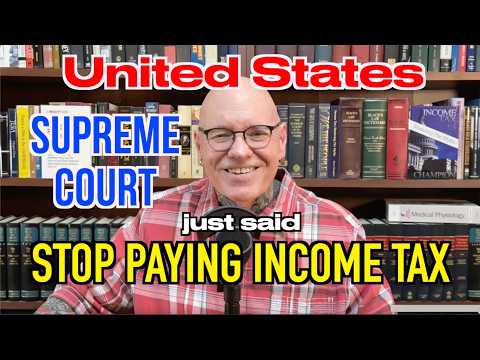
In June 2024, the United States Supreme Court made a decision in a case called Moore v. United States. A man named Dave Champion (author of the book Income Tax: Shattering the Myths) says this ruling is huge — so huge it could change America's future. He points out that the media only talked about one small part of it. They missed the bigger picture.
Champion has spent decades studying income tax law. He argues that the Supreme Court's words in this case support what he (and others like Peymon Mottahedeh of Freedom Law School) have been teaching for years: the federal income tax works differently than most people think.
Let's break it down in plain English — no lawyer talk.
Direct Taxes vs. Indirect Taxes — The Simple Difference
The Constitution divides federal taxes into two main types:
-
Direct taxes are taxes on people or their property (like a "head tax" just for existing). These must be "apportioned" — meaning divided among the states based on population. Congress has almost never used this kind of tax in U.S. history.
-
Indirect taxes (like duties, imposts, and excises) are taxes on activities or transactions. You can usually avoid them by not doing the taxed activity. These must be the same (uniform) everywhere in the country, but they do not need to be apportioned.
The Supreme Court in the Moore decision said clearly on page 2: "Taxes on income are indirect taxes, and the 16th Amendment confirms that taxes on income need not be apportioned."
Champion says this matches what he has taught for 30 years — and what Peymon Mottahedeh at Freedom Law School has also explained to thousands of Americans. Both emphasize that the income tax is an indirect excise tax on a government-granted privilege, not a direct tax on your labor or earnings as a right.
So What Is the "Privilege" Being Taxed?
According to Champion's reading of the law (and similar views from Mottahedeh), the federal income tax (found in Subtitle A of the tax code) is an excise tax on foreign persons and foreign corporations earning income from inside the United States. For them, doing business here is a privilege, not a basic right.
For ordinary Americans living and working in the 50 states, earning money through their own labor is a right, not a taxable privilege. That's why, Champion argues, the actual collection rules in the law (like who must use Form W-4 or file Form 1040) point to non-resident aliens and foreign entities — not everyday U.S. citizens earning domestic income in their home state.
He notes that Treasury Decisions and regulations specify these forms for non-resident aliens or their agents. No such clear instruction exists for average Americans earning their own domestic income.
The Supreme Court's statement that income taxes are indirect taxes reinforces, in Champion's view, that the tax only applies where a privilege is being exercised — not on the natural right to work and earn.
Peymon Mottahedeh at Freedom Law School has long taught a similar message: that most Americans (he has said over 97%) are not legally required to file or pay federal income tax on their domestic earnings because the tax is not imposed on them in the way people assume.
Bottom Lines — What This Means in Simple Terms
- The income tax is an indirect tax (an excise), not a direct tax on your person or property.
- Indirect taxes are avoidable by not engaging in the taxed privilege.
- The Moore decision restates that income taxes do not require apportionment because they are indirect.
- Champion and Mottahedeh both argue this confirms the tax law targets a specific privilege (foreign-source activity in the U.S.), not the everyday earnings of Americans working in their own states.
- If you learn the details and follow the actual words of the law, many ordinary Americans may discover they have no legal duty to file or pay on their domestic income.
Important note: This is complex. Champion strongly recommends reading his full book Income Tax: Shattering the Myths before making any changes. He says do not act "half-cocked." Understand the law completely so you can act safely and correctly.
How Does This Affect the Average American?
For the typical working person in the United States — someone with a job, maybe a small business, earning wages or salary in their home state — the message is hopeful but requires effort.
If Champion's (and Mottahedeh's) interpretation holds, millions of Americans could stop paying a tax they were never legally required to pay on their domestic earnings. That would mean more money in your pocket for your family, your savings, or your dreams. No more watching a big chunk of your paycheck disappear before you even see it.
But it's not automatic. You would need to get educated, study the actual statutes and regulations, and possibly change how you handle paperwork. Many people might feel nervous about stopping — even if they believe the law supports them. The average American could save thousands of dollars a year, but only if they learn the rules and have the courage to follow them.
How Does This Affect Poor Americans Living Under the Poverty Line?
For low-income Americans — those earning very little, perhaps relying on government assistance or minimum-wage jobs — the impact could be even bigger in percentage terms.
Many poor families already struggle to cover rent, food, and basic bills. If they truly owe little or nothing under the correct reading of the law, stopping an unnecessary filing and payment process could free up money they desperately need. Even a few hundred dollars a year matters a lot when you're below the poverty line.
It could reduce stress from complicated tax forms, fear of audits, or wage withholding they may not legally owe. However, poor Americans often have the least access to detailed legal education or books like Champion's. They may worry more about rocking the boat or facing enforcement actions, even if those actions are based on misunderstanding the law.
The biggest benefit for the poor would be empowerment through clear information — showing them they may have rights they didn't know about. But they would still need simple, trustworthy guidance to act without fear.
Final Thoughts
The Moore decision is real. The Supreme Court did say "taxes on income are indirect taxes." Dave Champion believes this validates long-held views he shares with Peymon Mottahedeh of Freedom Law School.
Whether this leads to big changes depends on whether everyday Americans learn the details and choose to act on the truth of the law.
If you want to dig deeper, Champion offers his book Income Tax: Shattering the Myths (check his site drreality.news for any current specials). He also suggests studying the actual court opinion and tax code sections yourself.
Knowledge is power. The more Americans understand how the tax system really works, the more freedom they may discover they already have.
A special note from Michael Cameron: If you decide to reach out to Peymon Mottahedeh or Freedom Law School for more resources or services, please mention my name (Michael Cameron). They have graciously offered that anyone who mentions my name should be entitled to a discount on their resources and/or services.
Have you looked into the Moore decision? Consider passing this article to friends and family who might benefit.
⚖️ Disclaimer: This article is for educational and informational purposes only. It does not constitute legal, tax, or financial advice. The views expressed are those of Dave Champion and Peymon Mottahedeh as summarized from publicly available interviews and publications. Always consult qualified legal and tax professionals before making any decisions regarding your tax obligations. Kingdom Builders provides this information to promote informed stewardship and personal research.